Knowledge Base
Large-Format 3D Printing for Public Art & Sculpture
2026-08-05
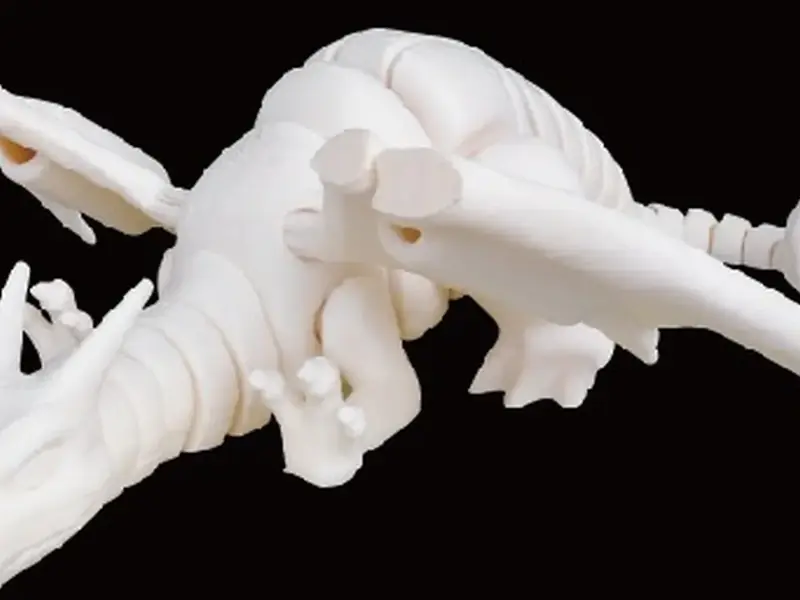
Public sculpture and cultural-tourism installations share the same tension: clients keep asking for bigger pieces on shorter timelines. The traditional routes — hand-carving, or splitting the model into small sections for a desktop FDM printer — both hit the same wall at 4-meter scale: too many seams, too much sanding, and no way to reproduce a second identical piece.
Why Pellet Extrusion (FGF) Can Print at This Scale
Standard FDM feeds from a spooled filament, which caps both extrusion speed and feed volume — printing something large just takes a very long time. FGF feeds directly from industrial pellets through a wider feed path with far higher throughput, printing the same volume several times faster than a filament machine. That throughput is the actual reason a 4-meter piece is feasible within a normal project timeline.
The larger build volume brings a direct benefit: a piece can print whole, or in just 2–3 large sections, instead of the dozens of pieces a small machine would require. That order-of-magnitude difference in seam count shows up directly in sanding hours and in how seamless the finished piece actually looks.
Material Choice for Outdoor Installations
People new to large-format printing often default to the PLA mindset from desktop machines, but year-round sun and rain will embrittle and crack standard PLA or ABS filament outdoors. Modified engineering pellets — ASA or PC-based — hold up far better against UV and weathering, making them the safer choice for permanent outdoor public art. The exact formulation should still account for local climate: heat, humidity, UV intensity.
From Digital Sculpt to Installed Piece: The Actual Workflow
- Digital sculpt/modeling (ZBrush, etc.) → topology check and a section plan sized to the machine's build volume, not an arbitrary cut
- Slicing and printing: large pieces in 2–3 sections at most — minimizing seam count is the priority
- Post-processing: sanding, seam-filling, painting/coating, vapor smoothing where the material allows
- On-site installation: transport and rigging plans need to be confirmed ahead of time for large pieces
Compared with hand-carving, the biggest advantage of this workflow is reproducibility — the same model file can be printed again for a different venue without re-carving from scratch. That matters a lot for touring cultural-tourism installations.
Related Industry Solution