Knowledge Base
How 3D Printing Cuts Lead Time for Injection Mold Tooling
2026-08-01
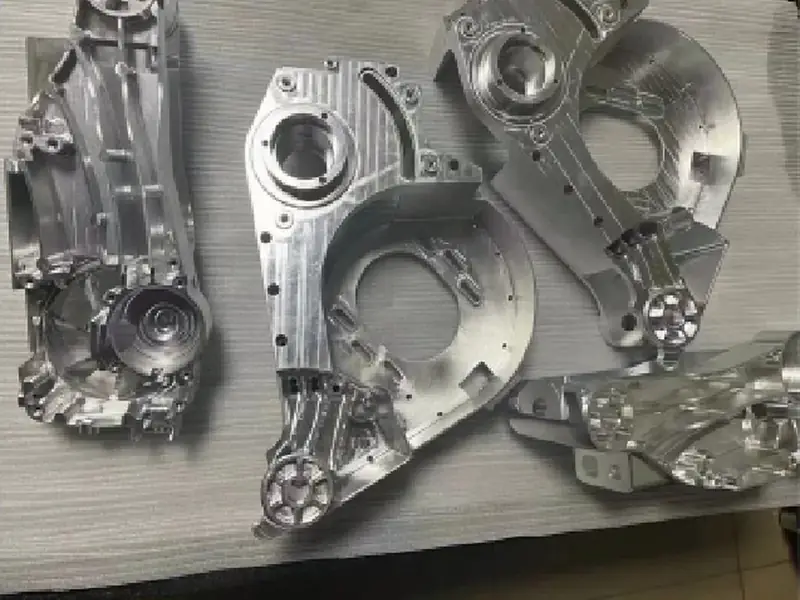
A mold going from drawing to first trial shot traditionally takes 4–8 weeks — roughing, EDM electrodes, wire-cutting, heat treatment, assembly, and any rework in between adds more. 3D printing isn't replacing that workflow; it's eating into the two stages that eat the most time and cause the most rework: cooling-channel design and early design validation.
Conformal Cooling: How Much Time Does a Metal-Printed Insert Actually Save
Conventional cooling channels have to be drilled, which means they must be straight lines — bends are approximated with angled holes, and channels simply can't reach deep into complex cavity geometry. The result: uneven cooling causes uneven shrinkage, parts warp, and cycle time gets padded just to let the whole part cool through evenly.
SLM metal printing can grow the cooling channel just a few millimeters beneath the cavity surface, following its contour exactly — even into deep cavities and thin-wall zones that need even cooling most. In real projects, conformal-cooling inserts like this commonly cut injection cycle time 15–30%. On a line running 24 hours a day, that number converts directly into throughput.
One caveat: this upgrade isn't worth it for every mold. For simple, evenly-walled parts, straight-line cooling is already good enough and a metal-printed insert may not pay for itself. But for deep cavities, uneven wall thickness, or geometry conventional cooling simply can't reach, conformal cooling is often the only approach that actually solves the problem.
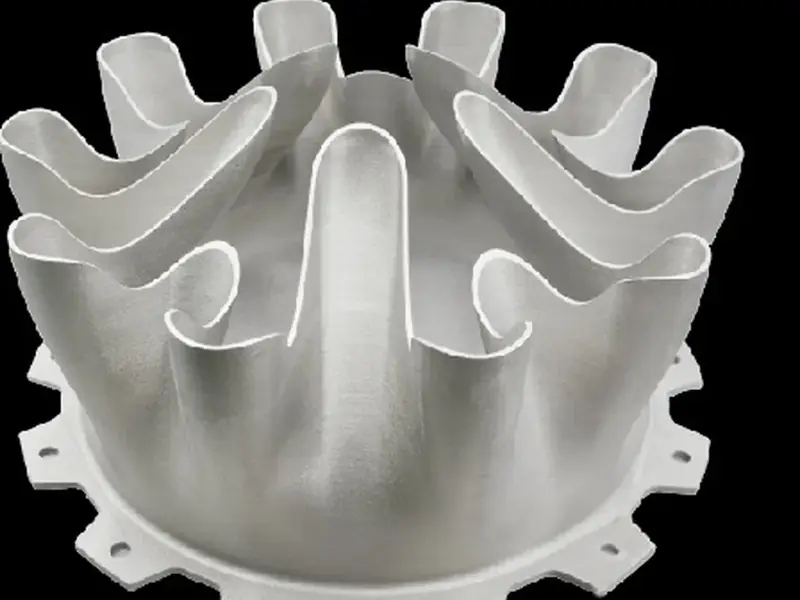
Before Cutting Steel: Validate the Design With a Printed Part First
The costliest mold mistake isn't a machining error — it's starting to cut steel on a design that was wrong to begin with. Wall thickness, parting-line placement, draft angles: these are hard to catch 100% in a drawing review, but assembly fit, ejection clearance and interference are obvious the moment you hold a printed prototype.
SLA/DLP resin prototypes can be in hand within 24–72 hours — faster than tooling up a soft-mold just for validation. For large body panels, FGF pellet-extrusion can print a one-piece master-mold pattern directly, without first assembling and aligning several smaller sections.
Small-Batch Orders: Delivering Without Cutting Steel Tooling
For orders in the tens to low hundreds, cutting a full steel mold usually doesn't pay off — tooling cost per part can exceed material cost. These orders are better served by printing the parts directly, or by injection molding against a printed tool, skipping tooling entirely and shrinking lead time from weeks to days.
- Conformal-cooling metal inserts: for deep-cavity, uneven-wall geometry — cuts cycle time 15–30%
- SLA/DLP resin prototypes: validate assembly and ejection in 24–72 hours
- One-piece FGF master patterns: no assembling multiple sections for large panels
- Small-batch trial runs: tens-to-hundreds orders without cutting steel tooling
Related Industry Solution